
Tech Tip: 4D.Vector Class: Anomaly Detector Utility Method
PRODUCT: 4D | VERSION: 20 R | PLATFORM: Mac & Win
Published On: January 7, 2026
The 4D.Vector class excels in high dimensional numeric computations, making it ideal for advanced anomaly detection in time-series datasets (e.g., sensor readings, logs, or financial metrics). By treating sequences as vectors, developers can use Euclidean distance or dot similarity to identify outliers
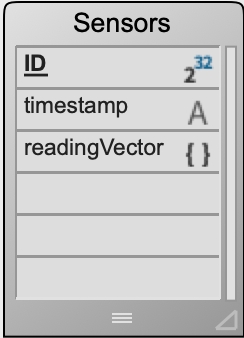
Sensors table
Util_detectAnomalies
Test Exemple
Sensors table
Util_detectAnomalies
| #DECLARE($series : Collection; $baseline : 4D.Vector; $threshold : Real)\ ->$anomalies : Collection $anomalies:=New collection var $paramCount : Integer $paramCount:=Count parameters If ($paramCount<3) $threshold:=2.5 End if var $i : Integer var $point : Object For each ($point; $series; $i) var $pointVector : 4D.Vector If (OB Instance of($point; 4D.Object)) if (OB Instance of($point.readingVector; 4D.Vector)) $pointVector:=$point.readingVector Else continue End if Else continue End if If ($pointVector.length=$baseline.length) var $distance : Real $distance:=$pointVector.euclideanDistance($baseline) If ($distance>$threshold) $anomalies.push(New object("index"; $i; "vector"; $pointVector; "distance"; \ $distance; "original"; $point)) End if Else continue End if End for each $anomalies:=$anomalies.orderBy("distance desc") |
Test Exemple
| var $baseline : 4D.Vector $baseline:=4D.Vector.new([22.5; 1013.2; 45.8]) var $readings : Collection $readings:=ds.Sensors.all().toCollection("readingVector") var $outliers : Collection $outliers:=Util_detectAnomalies($readings; $baseline; 3) |